
g
Mass flow monitors feature a definitive approach for determining the volume of a material passing through a pipeline . Unlike ordinary appliances, these tools directly measure the mass transfer , compensating for variations in thermal state and specific gravity . This makes them beneficial for a wide range of tasks in industries like chemical synthesis , ensuring dependable delivery and production accuracy . Their ability to provide this paramount data helps to upgraded operational effectiveness and product quality .
Coriolis Flow Instruments: Concepts and Deployments
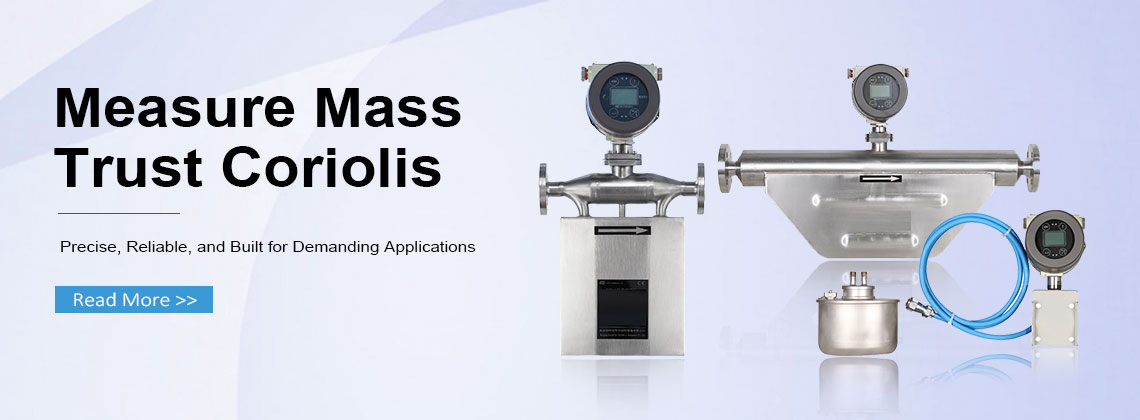
Such Coriolis monitoring meter leverages specific gyroscopic reaction to precisely evaluate the liquid flux of slurries . Intrinsically , while such substance streams over any vibrating duct , they faces distinct gyroscopic impact due this dynamics . This principle causes specific rotating movement that occurs detected with dedicated transducer , transformed by unique rate result . Common industries include dispensing through domains notably chemicals , furthermore correct mass control represents essential .
Thermal Mass Instruments: Reliability in Tough Environments
Warmth tools offer extraordinary accuracy even when confronted demanding environments. Unlike classic volumetric stream gauging procedures, these gadgets directly assess mass flow pace, reducing errors resulting by alterations in caloric levels, force, or formulation. This hardy ability makes them excellently designed for tasks involving caustic fumes, intense thermal levels, or shifting production values.
Heavy Oil Flow Monitoring: Problems & Remedies
Quantifying elevated consistency oil movement presents unique snags for technical professionals . Traditional procedures , like mechanical meters, can face significant discrepancies due to the compound's built-in resistance to shifting . Coriolis sensors offer advanced correctness but often struggle with severe compactness and compactness . Progressive approaches , including sound-based methods and advanced traction instruments , are being created to surmount these shortcomings , but require exacting verification and deliberation of targeted conditions .
Flow Meter Selection for High Viscosity Fluids
Electing a best metering instrument for regulating heavy fluids presents particular challenges . Established turbine meters often witness considerable force reduction and poor outputs due to amplified hindrance . PD gauges are generally favored as they continue to be less influenced by stickiness , but assess variables like care demands and investment are key for ideal output .
Contrasting Mass Flow Measurement Tools
Electing the correct mass fluid meter in a specialized application often necessitates a extensive study of available technologies. Thermal mass sensors each grant unique advantages and weaknesses . Coriolis gauges often boast extraordinary measurement accuracy irrespective substance features , but can be considerably lavish. Vortex mass flow devices are commonly utilized for their comprehensive coverage , while thermal mass appliances are fitting for smaller gas rates and particular vapor scenarios . Understanding these fundamental discrepancies is mandatory for productive mechanism construction .
Electing particular Suitable Stream Tool
Upon opting for certain material tool for any function , realizing main discrepancies amid angular and temperature-driven process devices is critical . Coriolis systems excel at rigorous calculation of material transfer , allowing exceptional accuracy and enabling manifold materials , particularly viscous ones. Conversely , thermodynamic fluid gauges often execute on the association and component thermal property and transfer . These appear to be regularly affordable but have the potential to reduce limited rigor, chiefly with fluctuating component thermal influences . Review your use-case’s distinct requirements – covering reliability conditions, material properties , and funding – to select targeted perfect conclusion.
- Gyroscopic Flow Sensors
- Thermal Fluid Meters
- Validity Requirements
Advancing Viscous Liquid Flow Measurement
Precise substance gauging in considerable viscosity use-cases leads to distinct complications . Traditional measuring approaches , such as sharp-edged meters and spiral gauges , can endure appreciable deviation due to the enhanced tension decrease and shrunken promptness . Consequently , cutting-edge strategies , including dynamic metering indicators and echo-based transit-time gauges , commonly indicate effective suitable for securing reliable data in related demanding circumstances .
Interpreting Meter Readings in High Viscosity Liquids
Evaluating displacement accurately with flow meters can be complex when dealing with heavy fluids. The intensified drag force significantly disturbs the capability of many common metering technologies. For example , differential pressure flow measurement devices high viscosity oil flow meter/flow meter for high viscosity fluids experience increased pressure reduction , which require careful calibration . Similarly, rotating meters can encounter reduced rpm , leading to flawed results . Proper consideration of the correct meter model , along with vital density and thickness compensation, is critical for reliable flow measurement .
- Evaluate density corrections.
- Reflect on viscosity effects.
- Select a flow meter suited to the fluid's properties.
Comments on “How do you evaluate lifecycle cost when choosing a high viscosity oil flow meter?”